
Anchor Pull Testing in Phoenix, AZ
We proof load your installed fall protection anchors on site and give you a written report for your program file.
Proof Test the Anchor, Not the Paperwork
An anchor's rating describes the hardware, not the installation. Concrete cures unevenly, masonry hides voids, inserts get overtorqued, and a re-roof can weaken anchors that still look fine. A pull test tells you which of yours would actually hold.
- $150Per anchor pulled
- $300Minimum per visit
Rates apply on site within 100 miles of Phoenix. Farther than that, we quote travel before scheduling.
Get an Anchor Testing Quote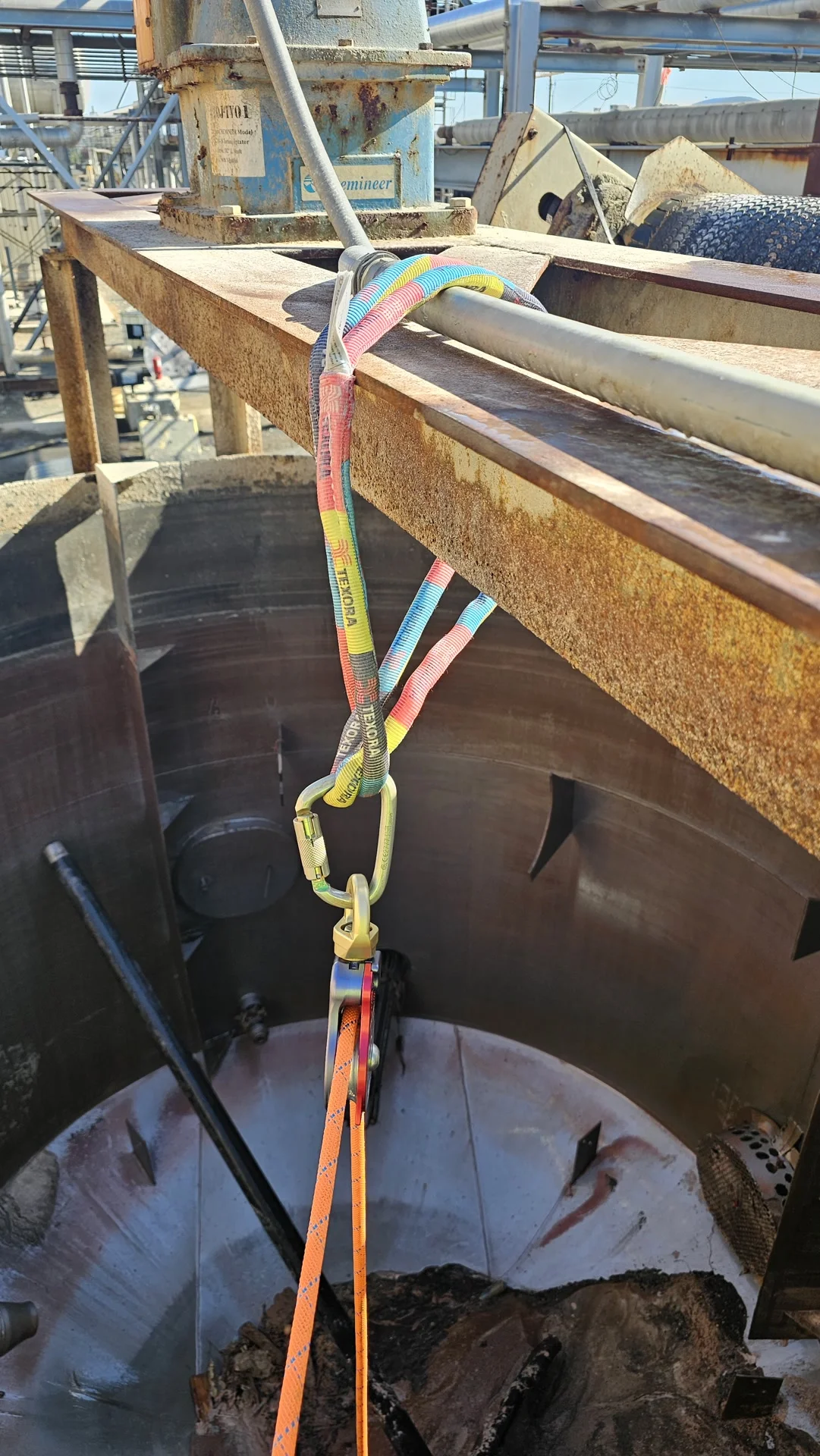
What We Can Test
- Roof anchors and rooftop tie-off points
- Concrete and masonry anchors
- Structural steel anchors
- Davit and mast bases
- Swage connections on permanent engineered horizontal lifelines
We use calibrated Veri5000 equipment rated 0 to 30 kN (6,744 lbf). Each anchor is loaded to the value set by its manufacturer or by the qualified person who designed the system, then held for the required time.
Not sure what you have? Send photos and any manufacturer paperwork, and we'll tell you what can be tested before you book. Retrofit anchors in existing structures need a look first.
OSHA 29 CFR 1926.502(d)(15), 1910.140(c)(13)
Anchor Pull Testing FAQ
What is an anchor pull test?
A measured load applied to an installed anchor to confirm it holds. We rig a calibrated load device to the anchor, pull to the specified load, hold it, and record the result. It checks the anchor as installed, in your actual substrate, rather than its lab rating.
Does OSHA require anchor pull testing?
Not by name. Under 29 CFR 1926.502(d)(15) for construction and 29 CFR 1910.140(c)(13) for general industry, a personal fall arrest anchorage must hold 5,000 pounds per attached worker, or be designed, installed and used under the supervision of a qualified person as part of a complete system with a safety factor of at least two. Most anchor manufacturers also require a proof test after installation.
What load do you pull the anchor to?
The value set by the anchor manufacturer, or by the qualified person who designed the system. We don't default to 5,000 pounds, because pulling that hard can deform an anchor, and manufacturers advise using the lowest force that meets the requirement.
How much does anchor pull testing cost?
$150 per anchor pulled, with a $300 minimum per visit, which covers two pulls. Those rates apply on site within 100 miles of Phoenix. Farther out, we quote travel before anything is scheduled.
What types of anchors can you test?
Roof, concrete, masonry and structural steel anchors, davit and mast bases, and swage connections on permanent horizontal lifelines. If you're not sure what you have, send photos first.
Can you test horizontal lifeline systems?
We test the swage fittings at the cable ends, using a second Veri5000 unit with an 8mm cable test frame. That does not test the end anchors the cable is bolted to, which is a separate pull test, so tell us which one you need.
How long does anchor pull testing take?
It depends more on access than on how many anchors you have. Rigging each anchor is the slow part, and one reached by ladder takes longer than a row on an open deck. Send your anchor count and locations and we'll scope the visit.
What documentation do we receive?
A written report listing each anchor's location and ID, its type, the load applied, the hold time, pass or fail, the date, and who tested it. It's ready for your fall protection program file and an ADOSH or OSHA inspection.
How often do anchors need to be re-tested?
Follow the manufacturer's interval, often yearly for permanent anchors. Also re-test after a fall, after structural work or a re-roof that disturbs the anchor, and whenever an inspection finds corrosion or damage.
Do you travel outside Phoenix?
Yes. Tucson, Prescott and Flagstaff are regular trips. Beyond 100 miles of Phoenix, we quote travel before anything is scheduled.
Round Out Your Fall Protection Program
Anchor testing is one part of a compliant program. We also teach fall protection training at the awareness, competent person, and climbing and rescue levels, inspect fall protection equipment, and write fall protection programs through our consulting practice.